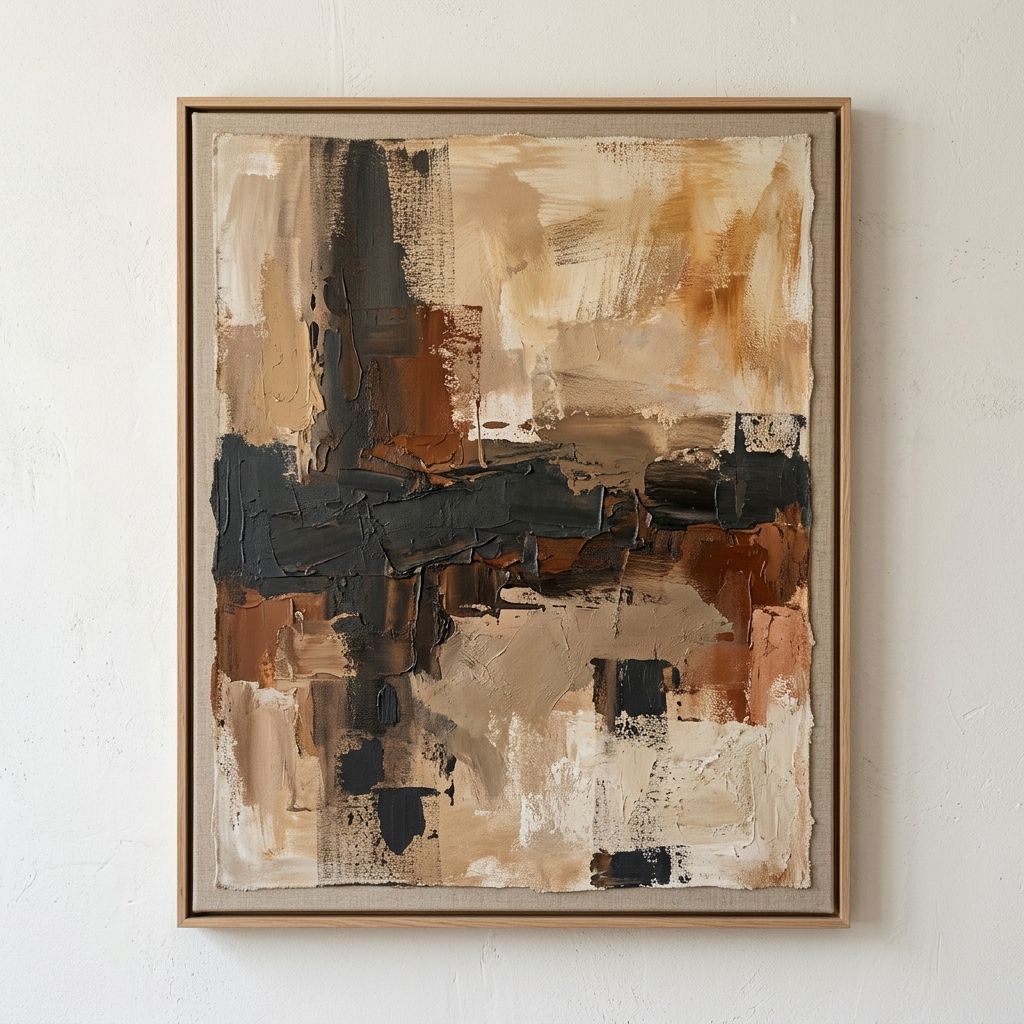
On the eve of her solo exhibition Abstracts of Earth, we sat down with artist Elena Rostova in her upstate New York studio to discuss materials, landscape, and the visceral nature of pigment.
Elena Rostova’s studio is filled with the smell of linseed oil, mineral spirits, and raw earth. Her canvases, some stretching over eight feet tall, lean against white walls, glowing with ochre, sienna, and charcoal. These are the works that make up her new exhibition at Aurelia Gallery, a collection that marks a bold transition into textural experimentation.
"I wanted the painting to feel less like a picture of a landscape and more like the landscape itself. I want you to feel the dust, the gravel, and the temperature."
On Materials and Earth Pigments
Sarah Benjamin: Your new work has a striking material density. Can you talk about the materials you incorporated into the paint mixture?
Elena Rostova: Yes, for this series I began collecting soil, crushed granite, and sand from the regions I was drawing inspiration from—specifically the volcanic landscapes of Iceland and the dry clay beds of New Mexico. I mix these raw minerals directly into oil paint and cold wax medium. It creates a heavy paste that I apply with trowels and palette knives. It forces me to work with the weight of the material rather than delicate brushwork.
Bridging Internal and External Terrain
Sarah: The compositions feel both chaotic and structured. How do you balance representation and pure abstraction?
Elena: I think all landscape painting is inherently abstract because you are flattening a three-dimensional experience. For me, it is about memory. I do not paint from photographs; I paint from the sensory recall of a place. The horizon line is often present, but it gets blurred, submerged in layers of paint. It represents the way time distorts our memory of space.